


Article: The Crown Appears Only in Shadow
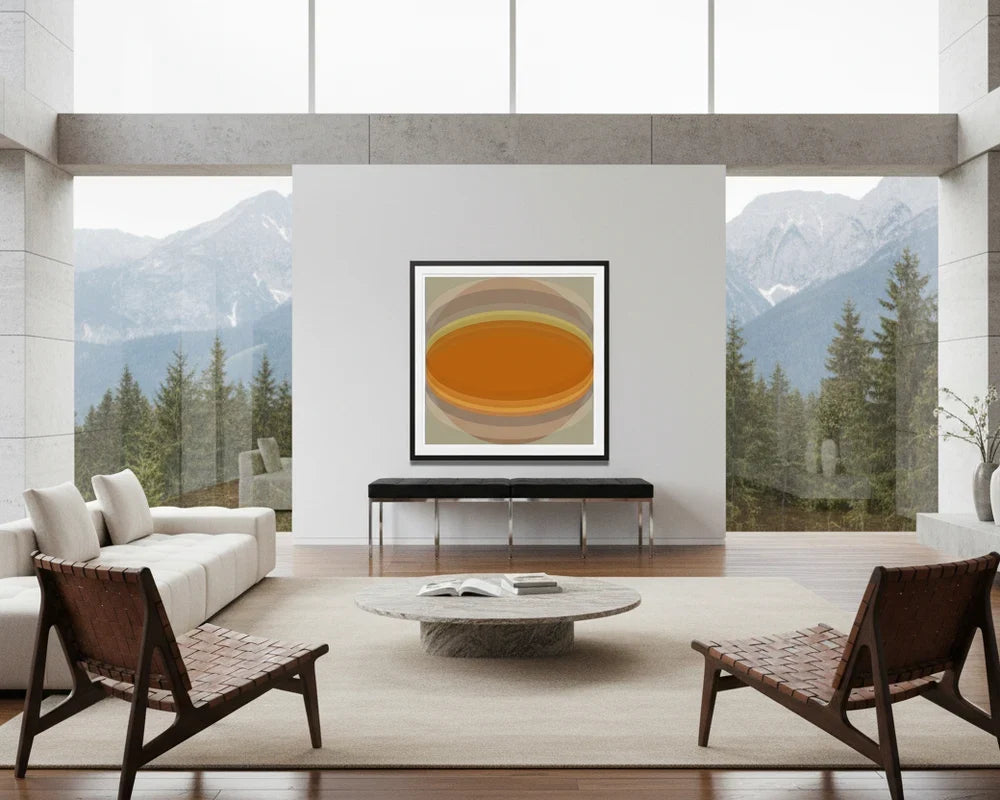
The Crown Appears Only in Shadow
Those who have stood in the path of a total solar eclipse tend to describe it the same way, and rarely in the language of astronomy. The light goes strange first, thin and silvery, as if the afternoon were being edited. The air cools. Birds fall quiet. Then, for a few minutes, the sun is gone, and in its place hangs a black disc ringed with a pale, feathered fire that no one sees on an ordinary day.
The corona has been there all along. It is simply too faint to be seen beside the glare of the sun itself. It takes a shadow to show it.

What the Word Remembers
The Greeks called an eclipse ekleipsis, from a verb meaning to fail, to abandon, to leave out. It is a word for something departing. For most of human history, that is how the event was met: not as geometry but as desertion, the light withdrawing its favor. Herodotus tells of a battle between the Lydians and the Medes that stopped mid-fight when day turned suddenly to night, and both armies, taking it as a message, made peace.
I think about that story often. A darkening that ended a war is hard to dismiss as mere absence.
What we now know is both more precise and stranger. The Moon is roughly four hundred times smaller than the Sun and, by a fortunate accident of scale, roughly four hundred times closer, so the two appear nearly the same size in our sky. A slightly smaller Moon would leave us only a ring of glare. A slightly larger one would hide the crown completely. The marvel arrives only when the cover is almost, but not quite, perfect.
Just before totality, the last sliver of the sun breaks into points of light along the edge of the Moon, known as Baily’s beads, and then into a single flare called the diamond ring. Then comes the hush. People who have never met cry out together, as though something very old in us still recognizes what is happening and answers.
Light Needs Its Opposite
Painters have understood this for centuries. Caravaggio built whole scenes out of darkness so that a single hand or face could burn within it. The brightness we remember in those canvases was made, patiently, by what surrounds it.
I believe the same is true of gold. Placed alone, it is only a color. Placed beside a deep dark, it becomes a presence, something that seems to emit rather than reflect. In my own practice, the dark passages of a composition are never the background. They are doing the work of the light.
We tend to treat the dim seasons of life as interruptions, subtractions from a story that was supposed to keep climbing. A total eclipse suggests another reading. Some things can only be seen when the glare is gone: what we truly value, who stays, which of our certainties were simply brightness.
We are also drawn, understandably, to what is settled. We prefer the sun at noon, fully lit and fully known. But much of what matters arrives at the threshold, in the minutes when the answer has not yet formed and the whole sky is holding its breath.
Golden Eclipse
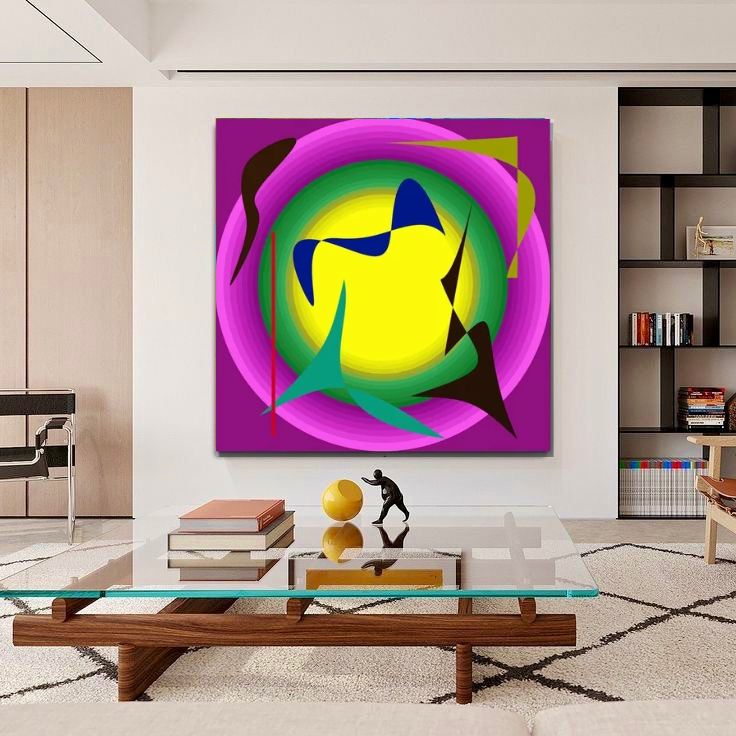
Golden Eclipse was made inside that thought. The composition is built on the geometry that anchors my work: sweeping arcs that meet and overlap, pools of gold set against deep passages of shadow. I wanted the viewer to stand at the threshold moment, when the sun is neither gone nor fully present.
It is not meant as a depiction of the astronomical event. It is closer to the feeling of one: radiance and mystery in the same breath, and the unusual calm of being asked to look at something differently. I imagine one person will see dawn and another dusk, and both will be right.
It is a print, made on museum-grade paper with pigment-based inks, and it is meant to be lived with for a long time. A work like this is not something to be solved on the first look. It rewards the way a night sky does, by being returned to. The last mark on each print is my pencil signature, a small human trace on an otherwise precise object.
Every life includes an eclipse or two. The question the sky puts to us is not how to avoid the shadow, but what we might see because of it. When the light returns, as it does, what will you recognize that you did not before? And what in your own life might be waiting for a little darkness to be seen?
If you would like to sit with that question, I invite you to spend some time with Golden Eclipse in the Contemporary Art collection.