

Article: Why Institutions Collect Abstract Art
Why Institutions Collect Abstract Art
The Room Where Decisions Are Made
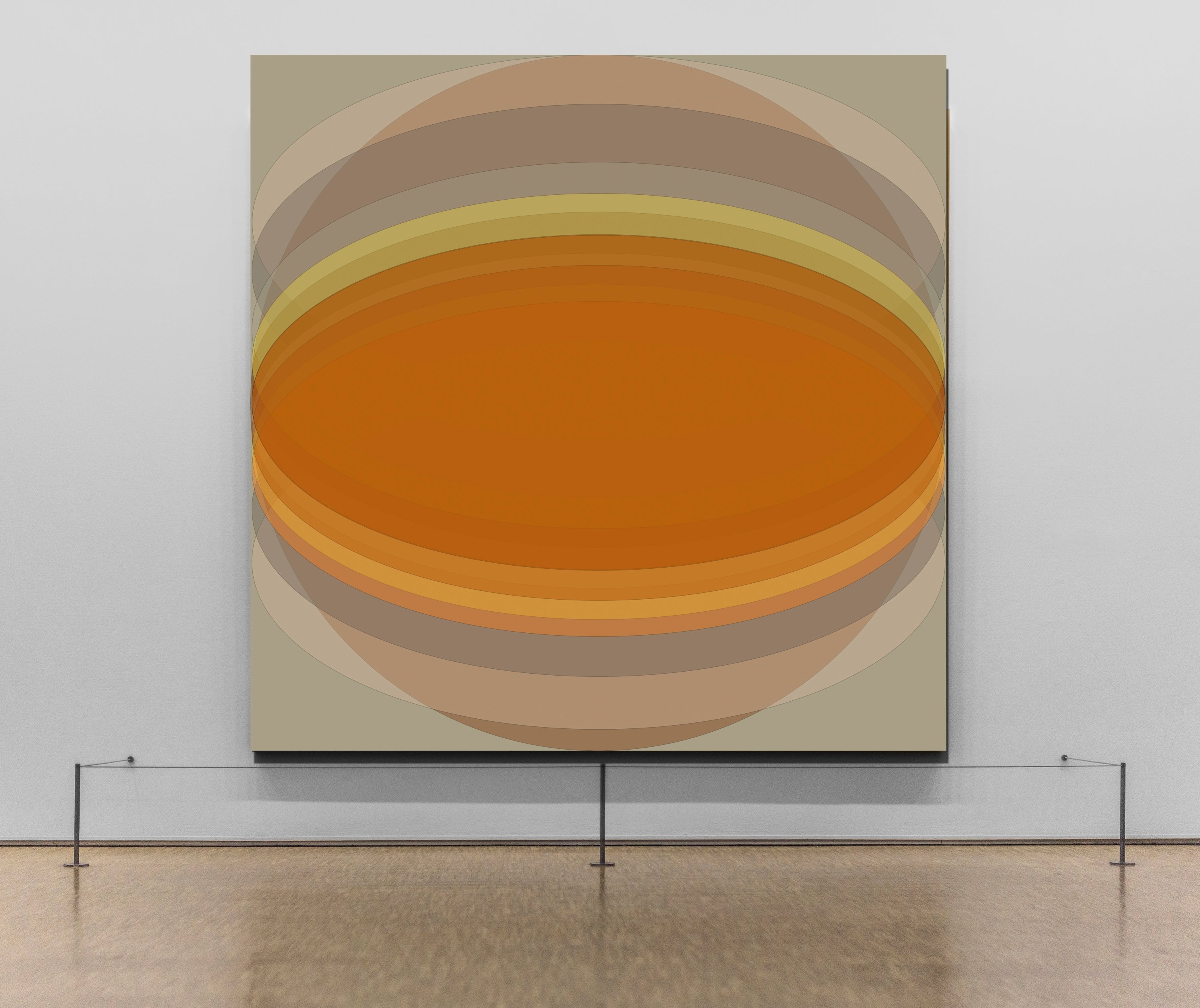
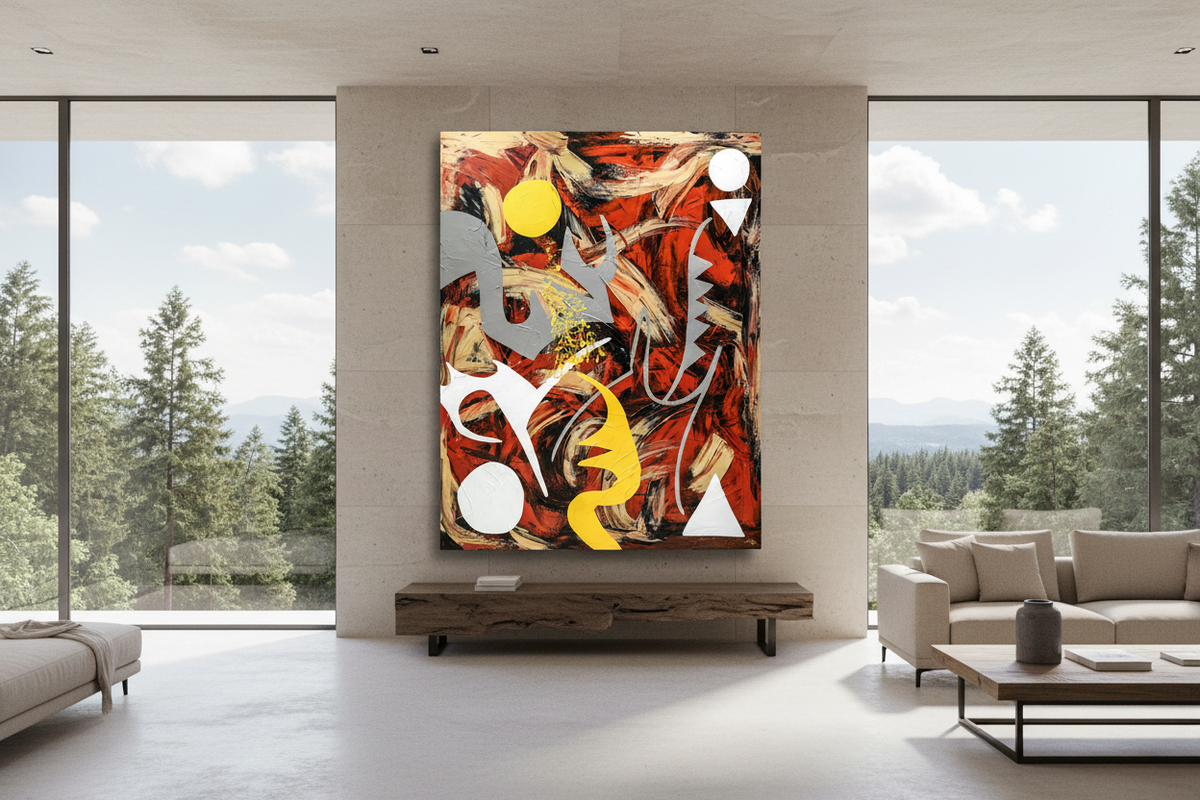
Picture a conference room on a high floor. Glass on two sides, a table long enough to hold an argument, a city laid out below like a thought no one has finished. Now look at the wall. It is rarely a slogan, a chart, or a portrait of the founder. More often it is a field of color, a horizon that isn't quite a horizon, a surface that seems to be thinking.
I have wondered for years why this is so.
A Collection Is a Statement of Character
The great institutional collections did not appear by accident. Chase Manhattan Bank began assembling its collection in the late 1950s under David Rockefeller, who understood that a bank was also a place where people spent their working lives, and that those lives deserved something more than beige. Deutsche Bank and UBS, among others, have since built vast collections over decades and hung them in corridors, lobbies, and meeting rooms rather than sealing them in vaults.
I think of these collections less as investments, though they are often that too, than as decisions about atmosphere. Every organization has a temperature: the speed at which people walk its halls, the volume at which they speak. A work on a wall sets that temperature more quietly than any policy manual. Before anyone says a word, it says that this is a place where slow looking is permitted.
The choice of abstraction is telling. A portrait tells you whom to admire. A landscape tells you where to stand. An abstraction tells you almost nothing, and that is its usefulness. It leaves the viewer alone with their own mind for a few seconds, which in a working day may be the only seconds of that kind on offer.
Mark Rothko understood the power of a room. In the late 1950s he accepted a commission to make murals for a restaurant in New York's Seagram Building, then withdrew, reportedly uneasy about his paintings becoming a backdrop for people who had come to be seen. The works eventually found homes elsewhere. Whatever his reasons, the story suggests something I believe: a painting is not decoration for a room. It is a presence in it, and presence is never neutral.
The Usefulness of Not Knowing
Consider what happens in a room where decisions are made. People arrive with positions. Each has rehearsed a certainty. The conversation becomes a question of who will yield, conducted mostly in the language of confidence.
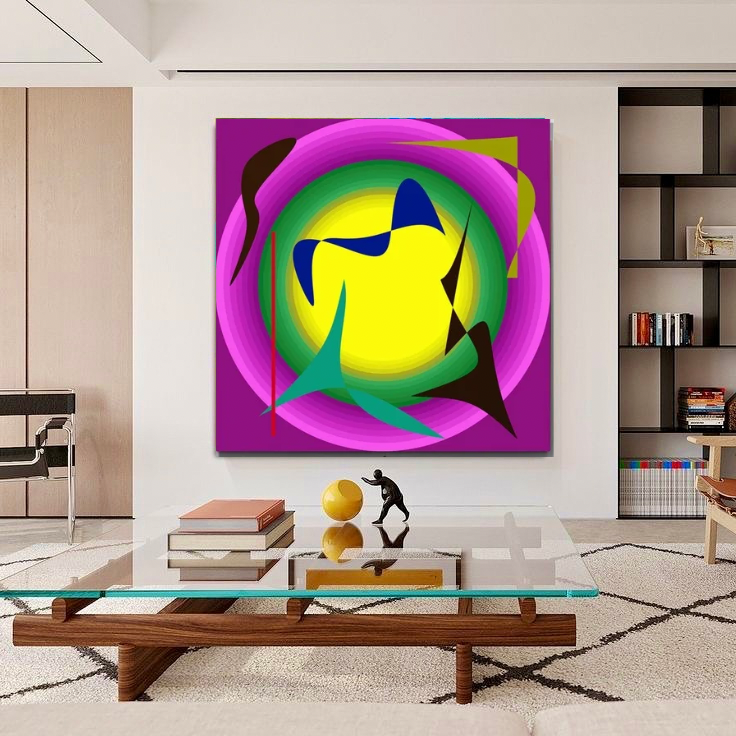
Now place a painting in that room, one that does not state its case. Eyes drift to it during pauses. One person sees a sunrise, another a wound, a third a doorway. None of them is wrong. Something small and important happens: the room is reminded that the same evidence can be read more than one way, and that being certain and being right are different conditions.
There is also the matter of time. A meeting has an agenda; a painting does not. It lives on a different clock, and simply by hanging there it holds a measure of patience the room does not naturally possess. The best works reward the tenth glance more than the first, which is a rare quality in any object we are asked to live with.
What I Ask of a Canvas
Wassily Kandinsky argued in Concerning the Spiritual in Art, published in 1911, that color and form could speak to the inner life directly, without borrowing the vocabulary of the visible world. More than a century later, that idea has settled into the walls of institutions, where it does quiet work most of us never consciously notice.
In my own studio the working principle is simple to state and difficult to keep: to create is not to conquer form, but to listen to it. I begin with color, texture, and the spaces between them, and I wait for the composition to reveal what it wants to be. When I have forced it, I can feel that in the finished work, a tightness, like a handshake held too long. When I have listened, the surface seems to breathe, and the viewer can enter it.
That is what I hope a work carries into a room where decisions are made. Not an instruction. An opening. A place for the mind to rest between one certainty and the next.
I keep returning to a small question. What might we decide differently if, for ten seconds before the meeting began, we looked at something that asked nothing of us? And which wall in your own life is waiting for it?
If you would like to sit with that question in front of an actual work, I invite you to explore the Contemporary Art and Limited Editions collections.